When Frying Fish, Wiping Ginger and Sprinkling Salt is Wrong, Mastering This ‘Timing’ Will Not Break the Fish Skin
When frying fish, wiping ginger and sprinkling salt is wrong, mastering this 'timing point' will not break the fish skin. When making fish dishes such as steamed fish and fish stew, and fish broth, you must first sear the fish to solidify the fish protein, which can dispel the fishy smell and enhance the aroma. In some places, they specialize in making seared fish, where the whole fish is marinated and then fried on both sides before being served directly. Such seared fish has tender meat and a crispy aroma, which is a different taste. However, many people mess up when frying fish. The fish skin sticks to the pot bottom, and when turning it over, the fish meat breaks apart, and the whole fish looks ragged.
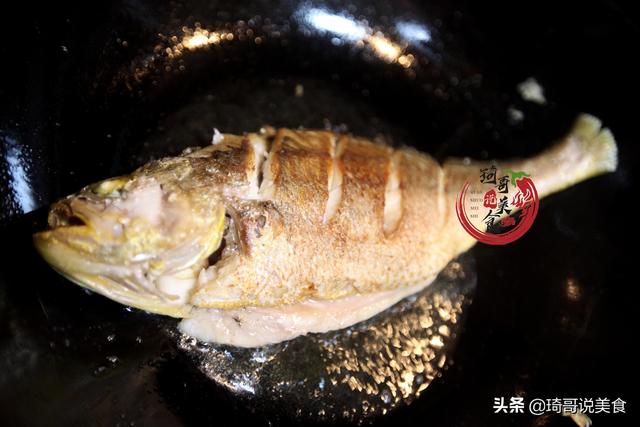
It's really so difficult to fry fish for these little buddies. So there are all kinds of tricks online, some of which involve wiping the pot bottom with ginger, some involve adding salt to the oil, and some involve brushing it with egg liquid… making frying fish very complicated and not necessarily successful. Let's recall how complicated it was when our families cooked when we were young. Did frying fish involve so many steps? When frying fish, just use oil, and families could fry fish with two golden-brown sides, fragrant, crispy, tender, and delicious. To make fish not break the skin and the meat intact, the key is to grasp the timing when putting it into the pot. Frying fish, wiping ginger and sprinkling salt is wrong, mastering this 'timing point' will not break the fish skin.
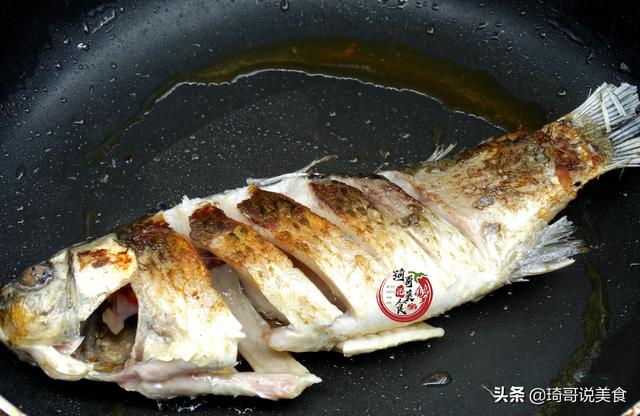
Yesterday I bought a pound of fresh yellow flower fish. Below I'll share how to grasp the timing for frying yellow flower fish for everyone. The fish was cleaned and prepared by the vendor, and I returned home to wash it, remove the black membrane from its belly, and cut some slits on both sides to facilitate absorption of the flavor. Yellow flower fish has some fat, which smells fragrant when fried, so I try to preserve it. I put ginger slices and scallion segments into the fish's body and belly, add liquor, fifteen grains of peppercorns, and give the fish a gentle full-body massage to dispel the fishy smell and enhance the aroma. Then I marinated it for about 15 minutes, picked off the ginger and peppercorns, and drained the water. This step is very important, I used kitchen paper to dry the fish skin, otherwise the fish would splatter oil when it's put into the pot. Someone says adding salt can prevent sticking, but that's impossible, oil splattering will cause sticking.
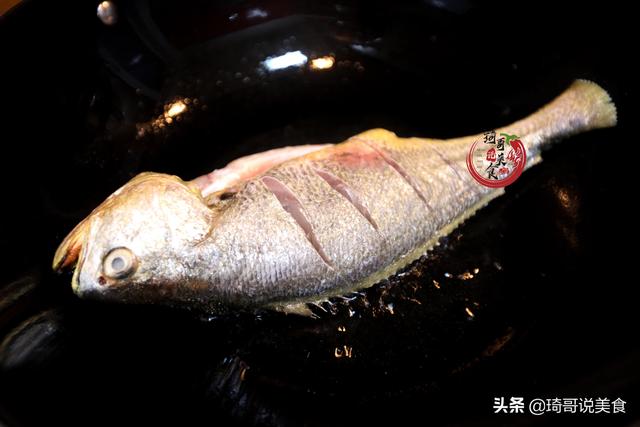
After draining the water, it's time to put it in the pot. I add a generous amount of cooking oil to a large spoon and shake it around to moisten the spoon. Then heat over medium-high heat until it reaches about 70% hot, which is indicated by the oil producing smoke. This is the best timing, I use my hands to hold the head and tail of the fish into the pot, and then reduce the heat to medium, and slowly cook it.
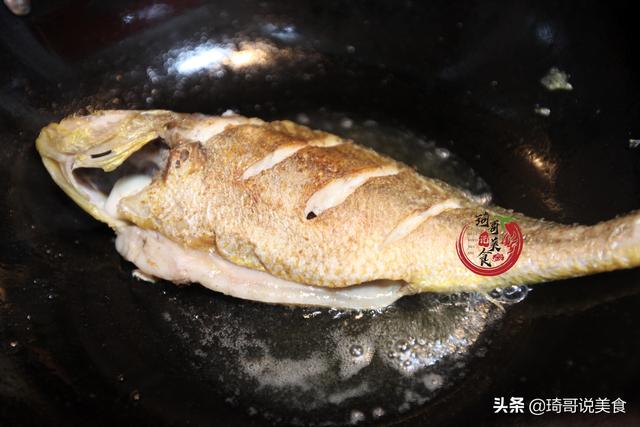
After putting the fish in the pot, I slightly tilt the spoon to pour oil onto the head and tail of the fish, so that the whole fish is coated with oil and receives uniform heat. Here, don't rush to turn it over, let it cook for about 3 minutes, and gently shake the large spoon. When the fish body detaches from the spoon bottom, at this time the bottom of the fish is golden brown, you can fry the other side.
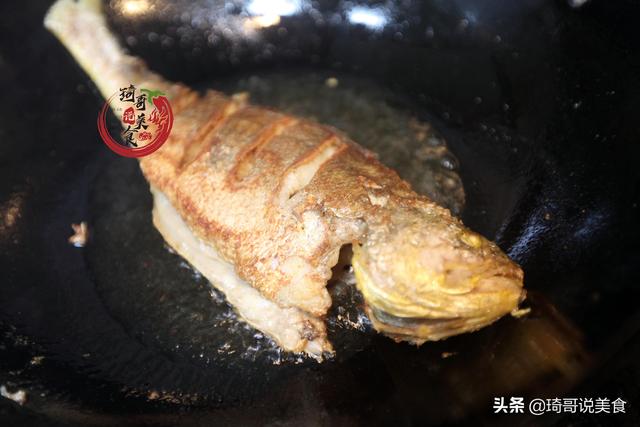
Newcomers can use a plate, and use a spoon with one hand to cooperate, easily flip it over. Old hands quickly come over and turn the spoon, continuing to cook the other side. After both sides are golden brown, the fish is cooked, and there is no concern that the fish skin sticks and the meat is broken. If you want to make fish stew or fish broth, continue the next step.
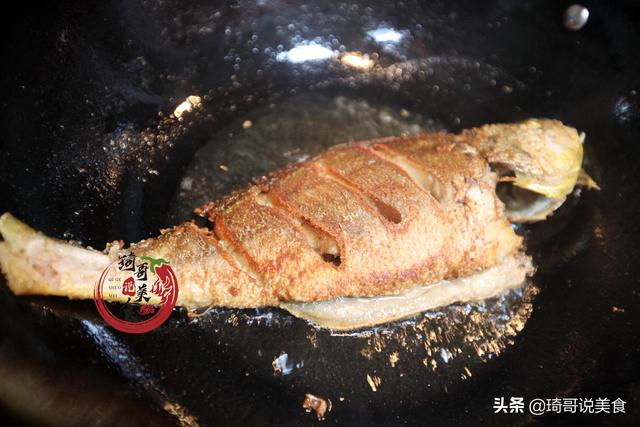
This timing is when the oil temperature reaches about 70% hot, and when you see some smoke, you put the fish in.
Don't put the oil into the pot without reaching the temperature, 100% it will stick and fall off the skin. The fish skin, when exposed to high heat, will instantly solidify, forming a protective layer, so you can fry any fish.
This is the trick shared by Qigao, no fancy methods, just pure dry goods, I don't know if you guys learned it.
Hello, I am Qigao sharing delicious food, and I will share food recipes and cooking techniques every day, welcome to follow. If you like this article, please help like, comment, forward and collect, which is my creative motivation ~