Honey Bear Emerges After 18 Years!
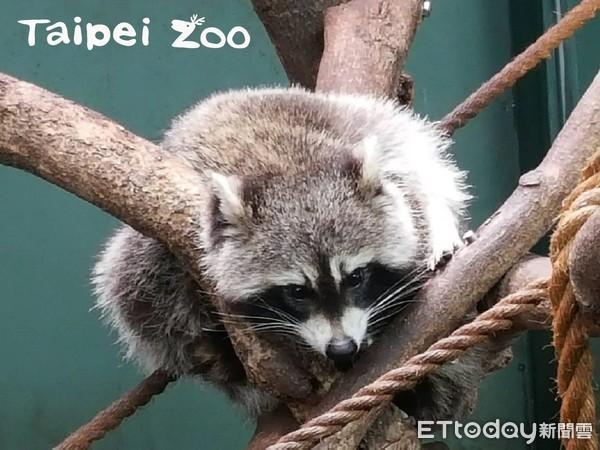
According to the zoo keeper's observation, raccoons grab catfish by touching with their hands, without looking with their eyes. (Photo/ Taipei Zoo provided.)
Reporter Lin Wei-chen / Composed by various sources
Talking about the raccoon family, everyone is most familiar with 'the one who washes cotton candy' the popular 'North American raccoon'. The Taipei City Zoo has specially planned to collect three species of raccoon family animals, the North American raccoon, the long-nosed raccoon, and the bear, and display them in the Children's Animal Area, allowing visitors to compare their differences. The honey bear, which lives in the canopy layer of the rainforest, has been 'hidden' since the beginning of the night animal exhibit's closure in September 1991, and has finally reappeared through this new exhibition theme.
In the raccoon family, everyone is most familiar with the North American raccoon, which is distributed in southern Canada to Central America and Panama. The zoo said that nocturnal raccoons have poor eyesight, 'According to the zoo keeper's observation, raccoons grab catfish by touching with their hands, without looking with their eyes, and 'cotton candy' children's area 'gray-gray' may not always bring food to the water to rub, even on land will use their hands to rub food. '
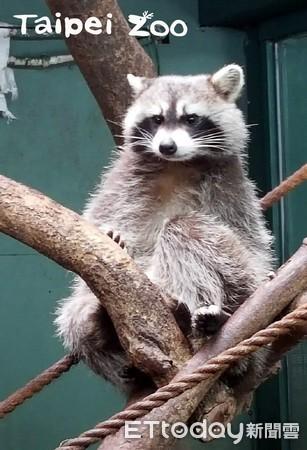
In the raccoon family, everyone is most familiar with the North American raccoon, which is distributed in southern Canada to Central America and Panama.
The long-nosed raccoon is distributed in South America and is the raccoon family animal that is most active during the day among the three species. The zoo mentioned that when foraging, the long-nosed raccoon uses a flexible nose to flip food in leaf litter or stone piles, and will not bring food to the water to rub, but they love to use their anal glands to mark their territory, so when you smell a strong scent, you should be able to see them in their 'aerial corridor' activity. '
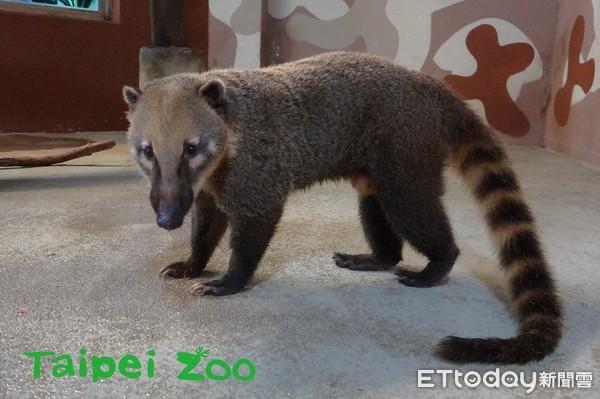
The long-nosed raccoon will use a flexible nose to flip food in leaf litter or stone piles. '
The honey bear, which has been hidden for 18 years, has finally reappeared again. The two 20-year-old 'Snowball' and the 18-year-old 'Doll' sisters are both nocturnal animals. The zoo suggests that if you want to see them, the time after 3 pm is better. '
►ETtoday Pet Cloud has IG now, come and follow me! '
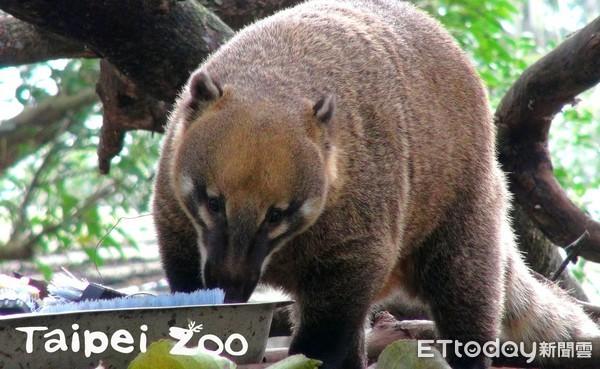
The long-nosed raccoon is the raccoon family animal that is the most active during the day among the three species. '
The zoo said that the honey bear, which lives in the canopy layer of the tropical rainforests in Central and South America from Mexico to the Amazon River basin, was early considered a solitary carnivore, but recent research shows that honey bears have social activities, they share fruit trees, and they also share resting tree holes, 'Snowball' and 'Doll' will sleep together during the day, sometimes in the grass pile on the right, sometimes in the wooden nest box. '
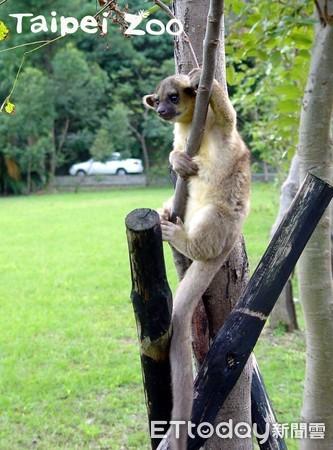
The honey bear has a long tail that is flexible like a hand, which can wrap around the branches to stabilize the body. In the wet season, they like to eat high-nutrient figs, and in the dry season, they eat honey from the Barama flowers, which is about 12 cm long, and their tongues can help pollinate the flowers when eating honey, promoting the health of the rainforest ecosystem. The zoo mentioned that honey bears use their submandibular glands, throat, and chest odor glands to mark their territory, and they also communicate with each other using voice and smell. The zoo's observation of these two new members who just moved to the children's area found that 'Snowball' likes to play on the perch, and 'Doll' likes to eat on the ground, and next time the feeding time is easy to distinguish who is 'Snowball' or 'Doll' '
You may also like to see '
►Watermelon stalls in the middle have 'advanced green buildings'! Farmers' tears: 'Chicken mom, seedlings are expensive!' '
►Vegetables smell so good! The stray cat 'Patting Hands' 'steals' and 'teases' and 'scolds' '
►Baby shark swims into the Port of Hualien! Eating and eating South Pole shrimp all the way, fishing guests praise: so cute! '
►