China's Green Paradise: Discovering the Rare Chestnut-bellied Whistler in Siming | Uncovering the Precious Bird Species in Longqiushan
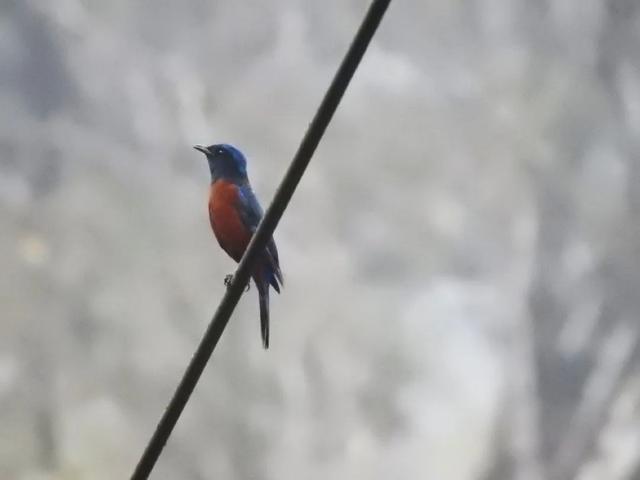
On March 8th, in the afternoon, researchers from the Fujian Longqiushan National Nature Reserve Administration were conducting fieldwork when they unexpectedly discovered a vibrant little bird on a branch in a dense forest, which surprised the staff. It turned out to bea rare thrush species – the Chestnut-bellied Whistler.
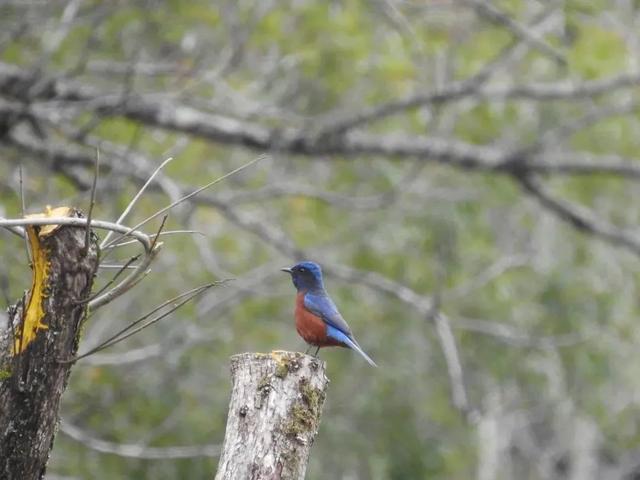
On the branch, its tail was swaying back and forth, emitting a melodious chirping sound, which was very attractive. Experts from the Fujian Birdwatching Association said: Chestnut-bellied Whistlers are in small numbers, with erratic movements, and you can only find them during the breeding season. Taking a photo is a rare opportunity.
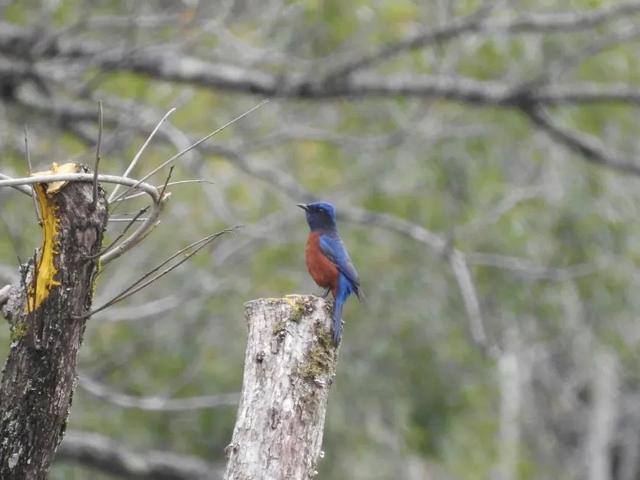
The Chestnut-bellied Whistler belongs to the Thrush family within the order Passeriformes. It is commonly known as the Chestnut-colored Chest Thrush or Chestnut Thrush. It is a large thrush (24cm) with sexually dimorphic colors. The male’s face has a black facial patch. The upper body is blue, with the tail, throat, and lower body with a vibrant chestnut color. The female is brown, with the upper body having near-black fan-shaped markings, and the lower body is covered with deep brown and fan-shaped markings of pale yellow. The chicks have russet-colored spot patterns and fan-shaped markings of brown. The iris is dark brown; the beak is black; the feet are black-brown. It is distributed in the south and southeast of Tibet, Sichuan, western Hubei, Fujian, Yunnan, Guizhou, Guangxi, and Guangdong, in mid-altitude areas. It breeds in forests at an altitude of 1000-3000 meters, and overwinters in low-altitude, open, and rocky hillside forests. It is commonly found on the crowns of small trees. The species’ original origin is in the Himalayas.
More and more rare birds are appearing in the Longqiushan Nature Reserve, which indicates that Longqiushan has achieved great success in practicing ‘hills and rivers are golden mountains and silver mountains’, ecological conservation has improved, creating more ‘hills and rivers are golden mountains and silver mountains’, and more bird paradises.
Source: Beautiful Longqiushan