Shaanxi ‘Folk Palace’ Also Conceals a Mysterious ‘Underground Courtyard’: Have You Visited?
This is Xiao Yu's travel diary, wandering and stopping, and I invite you to explore Shaanxi.
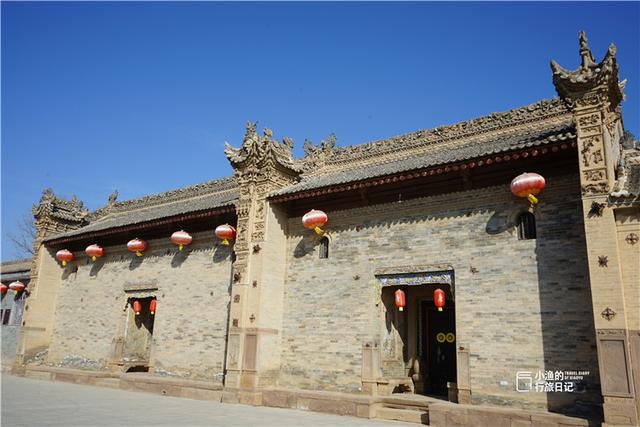
Tang Family Courtyard in Xinyu, Shaanxi Province, is known as 'the folk palace' on the Huangtu Plateau. This courtyard, dating back over 300 years, originally comprised 8 courtyards and over 2700 rooms. Today, only two of the lower courtyards are open for visitors. However, its exquisite 'Three Carvings' art still allows us to feel the beauty of ancient architecture, witnessing the prosperous Qin and Shang families of Shaanxi during the Ming and Qing dynasties.
If you are interested in Tang Family Courtyard, you can see the detailed content in my previous travel notes:The 'Small Palace' on the Huangtu Plateau: Dusting off a Century of Qin and Shang History, a Gem of Folk Architecture
In fact, besides preserving two courtyards,Just a few hundred meters from Tang Family Courtyard is a mysterious 'underground courtyard'This mysterious 'underground courtyard' is the tomb garden of the sixth generation of Tang Tinteun. To visit it, you must inform the scenic area manager, and they will use the key to take you to explore. Because of this, many tourists inadvertently miss it.
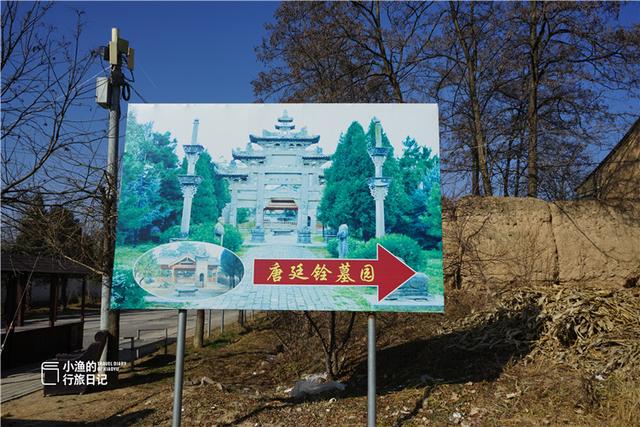
Tang Tinteun was not a prince or official, but he was the highest-ranking member of the Tang family, eventually reaching the rank of 'Grand Supervisor, Honorary Inspector, entrusted with salt transport, and superintendent of salt affairs.' This is a solid third-rank position. His tomb was built lavishly, representing the 'Three Water Tangs' – the prosperous 300-year history of the Qin and Shang families. The tomb garden's exquisite brick carvings and stone carvings have high cultural and artistic value, and are worth seeing.
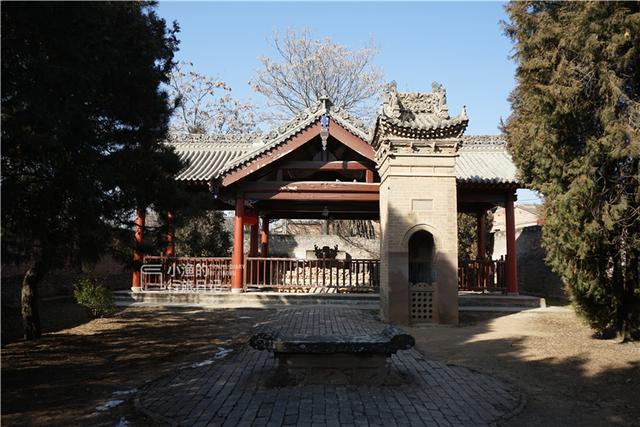
Starting from Tang Family Courtyard, pass through a barren land and arrive at a red iron gate – this is Tang Tinteun's tomb garden. The garden is unusually quiet, with no one present. The iron door is unlocked with a 'creak,' and you see a path leading upwards, with a tall and majestic stone pavilion in the center, under the blue sky and green pines, giving it a grand appearance.
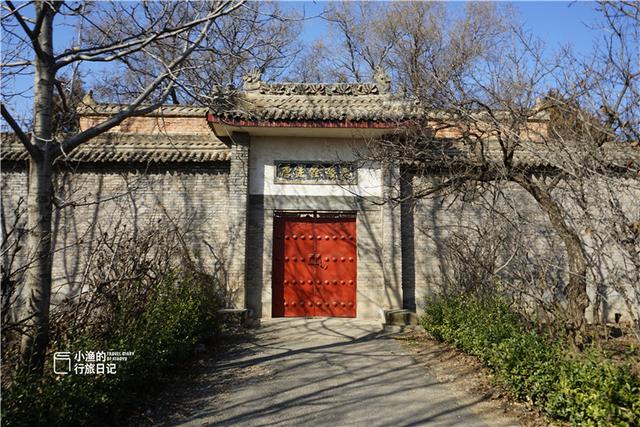
From the entrance of the tomb garden to the pavilion,
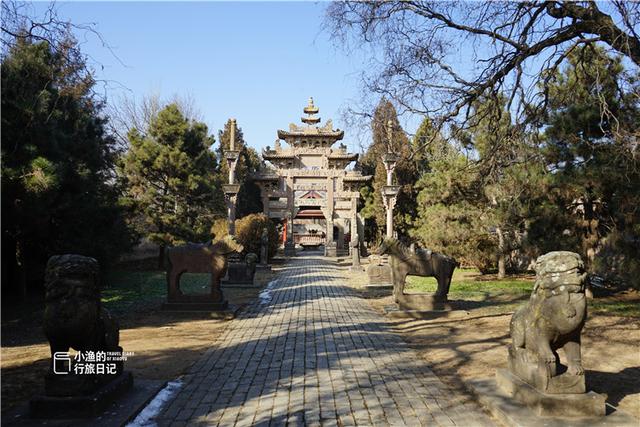
On both sides of the path are stone lions, stone horses, stone sheep, and stone people, all standing in pairs.These stone carvings each have a different meaning, such as stone lions are used to ward off evil, stone horses are the owner's mounts, stone sheep represent filial piety, and stone people are the owner's servants, with two stone people holding tea cups and ingots, representing a rich and idle lifestyle, showing the family's wealth and power.The final two towering stone pavilion pillars are products of China's ancient imperial examination system – a symbol of honor and glory for those who passed the exam.
According to historical records,
The construction of Tang Family Courtyard's stone pavilion alone took five years and 180,000 taels of silver, demonstrating the complexity and scale of the project.
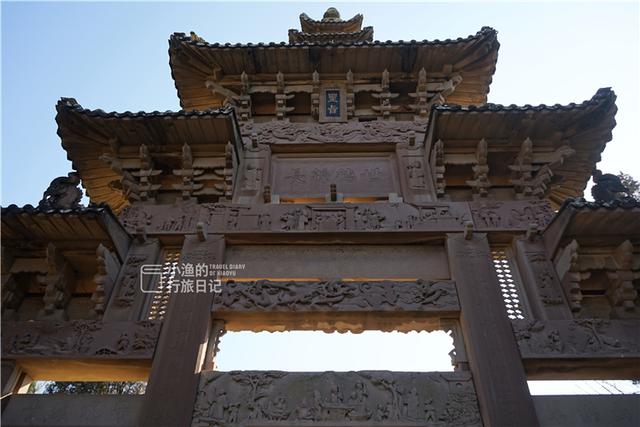
Passing through the stone pavilion, you'll find a stone table, used for offering sacrifices; behind the table is a stone tablet, with inscriptions such as 'Grand Supervisor, Honorary Inspector, entrusted with salt transport, and superintendent of salt affairs,' and further on is a building resembling a pavilion, which is Tang Tinteun's tomb chamber.
I was initially puzzled why the tombstone was not on the main axis, and then I found out that it could not be placed on the same line as the 'Imperial Decree' on the stone pavilion. There's a lot to learn from China's ancient culture – starting from the path in a tomb in Xinyu, Shaanxi.
Arriving at Tang Tinteun's tomb chamber, you'll find that the entire tomb chamber is like a miniature Qin and Han Dynasty courtyard, with the building's ground floor resembling the roof of a traditional courtyard. Later, I learned that Tang Tinteun's tomb chamber was actually built according to his original residence, a real 'underground courtyard.'Today, we see this chamber is empty; in 1970, Tang Tinteun's tomb was excavated, and the body was discarded in the wilderness. After restoration, visitors can enter the chamber through two staircases.
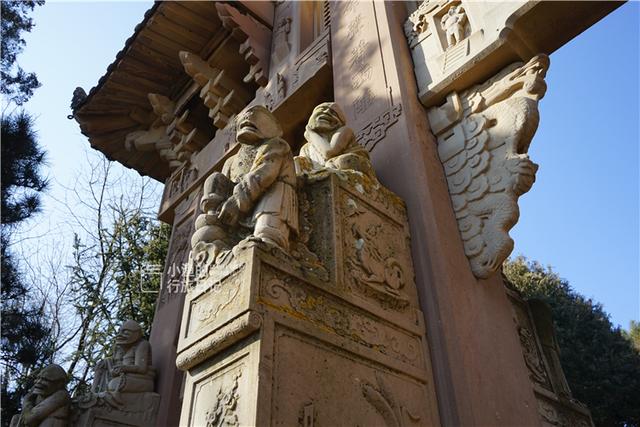
The ground floor of the chamber resembles a courtyard roof,
Descending the stairs into the chamber, you'll find that the walls are carved with numerous stone carvings and brick carvings, which are incredibly intricate and beautiful.
Tang Family Courtyard is famous for its 'Three Carvings,' and there are records that 3200 blacksmiths, carpenters, and painters worked here during the construction of Tang Family Courtyard. Wealthy Tang family invited craftsmen from all over the country to create exquisite brick carvings, wooden carvings, and stone carvings with their super-high and excellent craftsmanship, creating a treasure of Shaanxi folk architecture.
Even Tang Family Courtyard's tomb chamber can be seen with exquisite 'Three Carvings'!
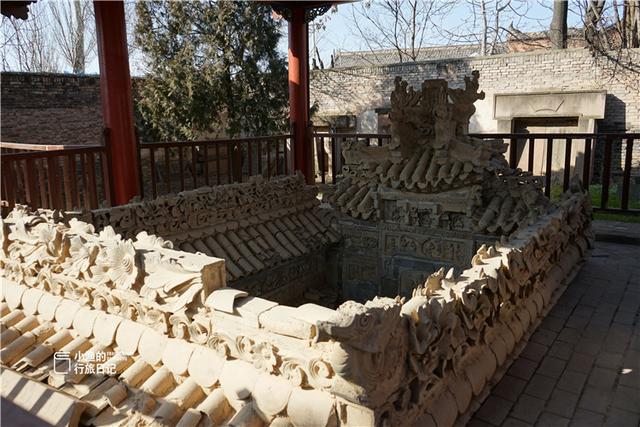
The tomb chamber's south-facing wall features a mirrored wall covered with intricately carved stone sculptures and brick carvings, which are a testament to the visitors' fascination.
The entire tomb chamber is built according to a courtyard design, with the north side facing the chamber and the south side facing the pavilion. On either side are the corresponding side houses, which are actually storage areas for funerary goods.
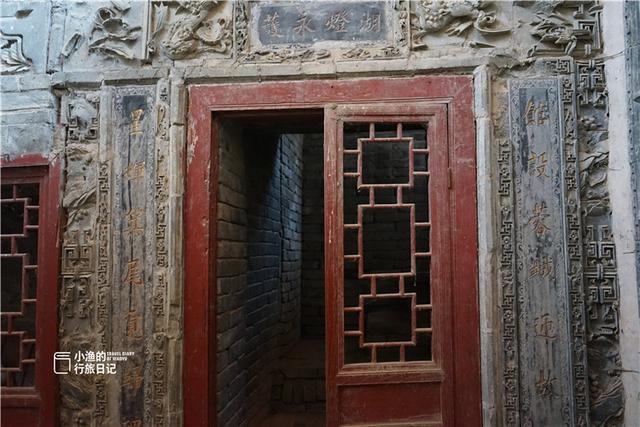
The north tomb chamber, the tomb door is open, and the surrounding exquisite carvings.
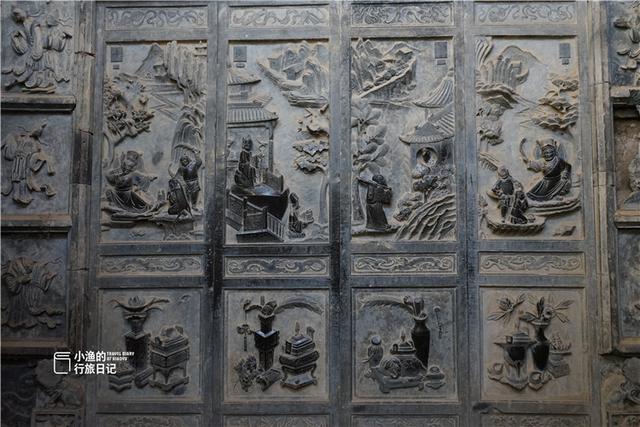
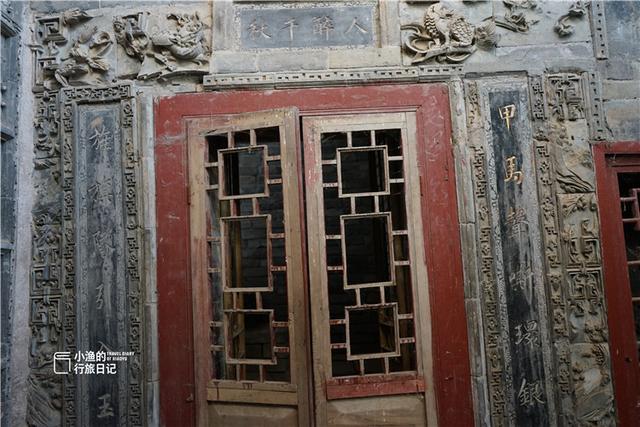
The tomb chamber and the side houses have doors and windows and inscriptions, and are built very realistically.
The side houses (storage areas for funerary goods) have doors and windows and inscriptions, and are built very realistically.
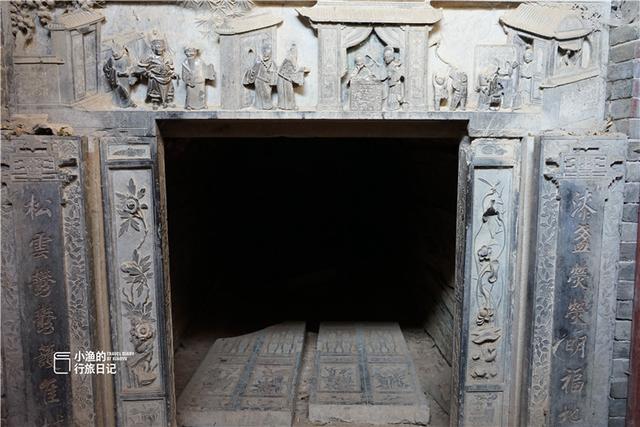
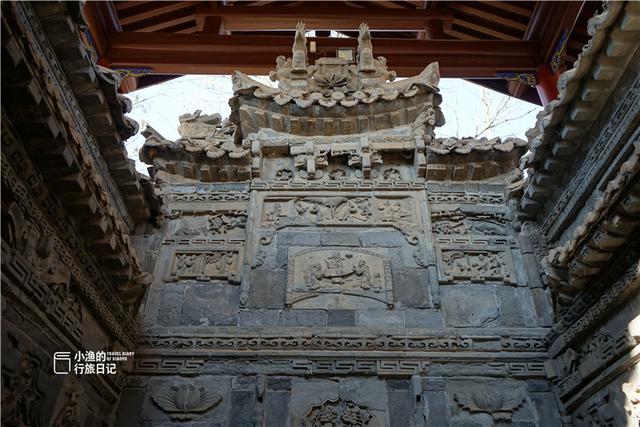
Standing in the tomb chamber, you feel that this 'underground courtyard' is magnificent and grand. Looking up from below, the overlapping wooden roof structure with its beam, eaves, brackets and rafters appear even more luxurious and magnificent. This 'underground courtyard' demonstrates the glory of the Three Water Tang families.
Looking up from inside the chamber, the overlapping wooden roof structure, the overlapping beam, eaves, brackets and rafters look even more luxurious and magnificent.
Finally, let me provide some practical tourism information. If you want to visit, you can refer to…
Tang Family Courtyard, also known as Tang Folk Museum, is located in Tang Village, Xinyu County, Shaanxi Province, about 2 hours drive from Xi'an. You can directly navigate to the location.
The entrance fee is 35 yuan.
To learn more about hidden and interesting tourist destinations, please follow 'Xiao Yu's Travel Diary' and discover more beautiful places with Xiao Yu!
235