Cycling Route (2)
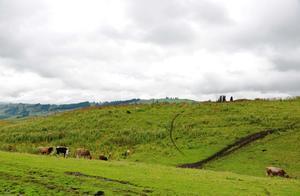
Riding down the slope after passing Yellow-Walled Mountain was exhilarating, like a gust of wind and thunder. Afterwards, we arrived in Lingchuan County. I remember one time we arrived around 7:30 PM, during the National Day holiday, everywhere was crowded, we stayed in a place called Yunzhong Guest House. It didn't have air conditioning, hot water, or an indoor bathroom. Fortunately, the conditions were simple, corresponding to the price was cheap, each person 15 yuan. It was the last room, as soon as we settled in, the boss said to the new arrivals that the rooms were full. Luckily!
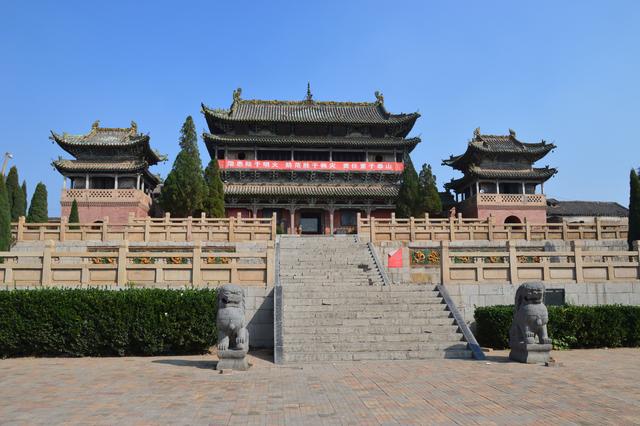
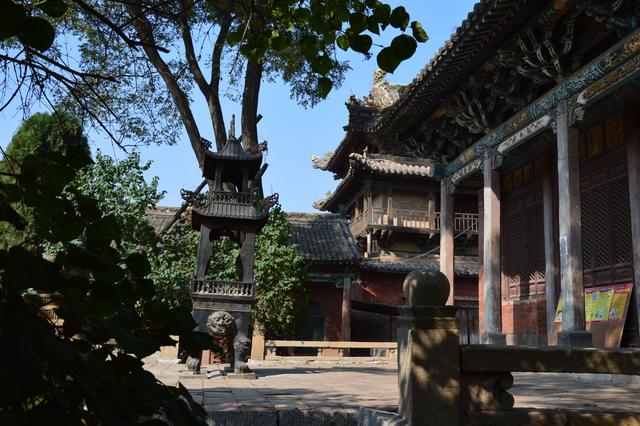
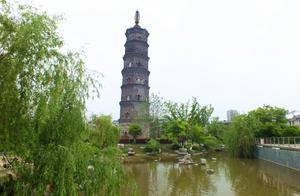
Lingchuan County has a Chong'an Temple. According to Douwang (Baidu), the existing buildings were constructed during the Ming Dynasty, with a two-courtyard layout, and the towering steps in front of the gate still tell of the grandeur of the past. Here's Douwang's original words: Chong'an Temple, also known as Lingyan Temple, is the head temple of Lingchuan Great Temple. It became relatively prosperous during the Sui Emperor Kaoshi's 16th year (596) when religious activities were banned. The creation date is unknown, originally named Zhangba Buddha Temple during the Tang Dynasty, and was renamed 'Chong'an Temple' in the Song Dynasty's Taiping Xingguo 1st year (976). Chong'an Temple's architecture is grand and majestic. After comprehensive renovation, it has regained its former glory and become a famous tourist attraction in Lingchuan. Chong'an Temple's most beautiful building is the first Mountain Gate and Lingling Tower. Legend has it that the tomb of the Western Han Dynasty's Zhao Guogong Shi Le was located beneath the tower. Inside the bell tower on the east side of the temple is a six-foot-tall, one-zhang-five-foot-long, and over ten thousand jin bell, a treasure of the temple.
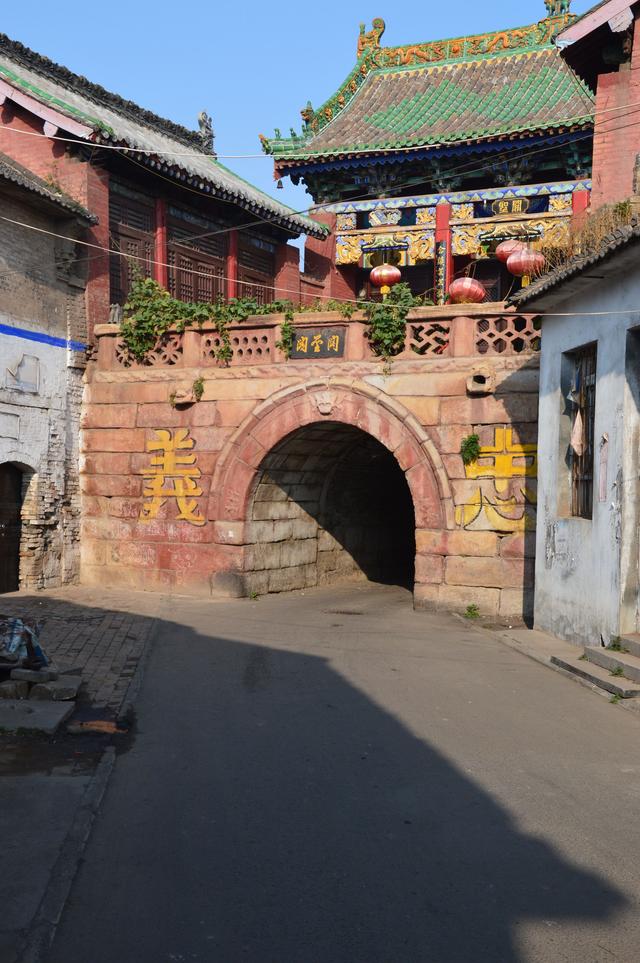
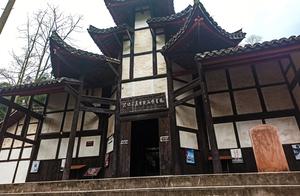
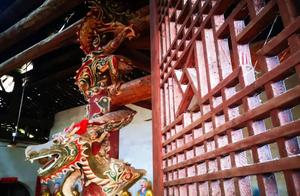
While wandering around in the city, we accidentally discovered such an ancient building in a small street. From the stone of the lower entrance, it was clear that it was not newly built.
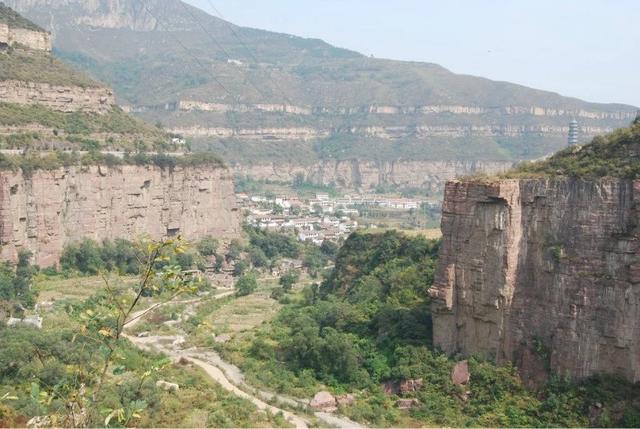
I always thought we were traveling through the Taihang Grand Canyon. To avoid causing embarrassment, I checked on Baidu just now to find out it's actually the Huhuan Grand Canyon. It seems that the road signs along the way indicate that we are in Huhuan County. Haha.
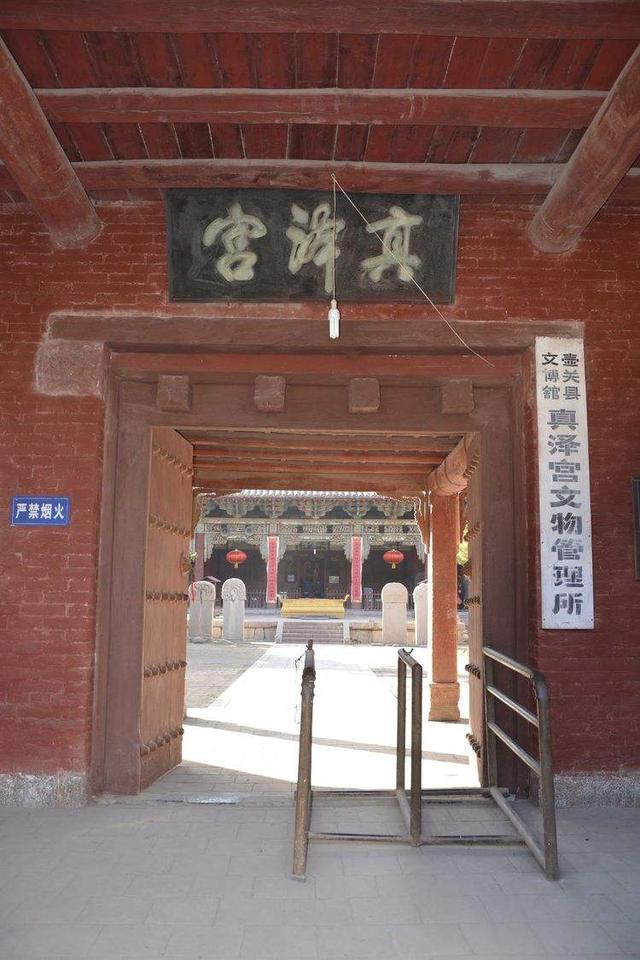
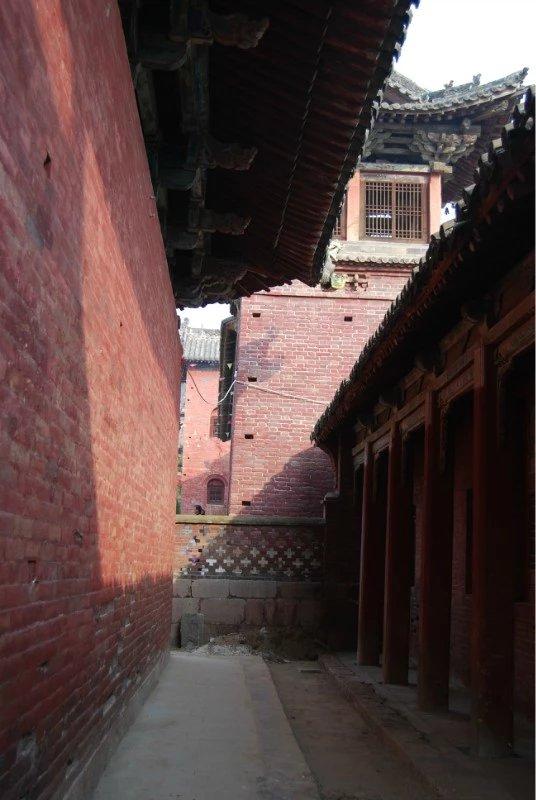
The entire Grand Canyon is quiet and remote. After entering the canyon, about ten kilometers later, there's Zhenzhaizi Two Immortals Palace, a typical Shanxi-style building. Regarding the two Immortals worshipped in the palace, frankly, I didn't recognize them from the mythology of immortals. Perhaps they were local immortals. Zhenzhaizi Two Immortals Palace is also known as Two Immortals Temple, Grandma Temple, facing north and south, with a five-courtyard layout, covering an area of 9600 square meters. It was built in the Tang Dynasty's Emperor Chongde's 2nd year of the Qianning period (895), and was repaired during the Song, Yuan, Ming, and Qing dynasties. It took shape in the Qing Dynasty's 30th year of the Qianlong period (1765), forming a five-courtyard building layout with a, mountain gate, theater, and pavilions. The central hall, the Hall of Ancestors, the Hall of Ladies, and the side river tower, bell tower, dressing tower, flower arrangement tower, and auxiliary hall. The central hall is five bays wide and three bays deep, with a single-eave hipped roof, with seven-step bracket support and double-angle eaves. There are 28 steles and inscriptions from the Song, Ming, Qing and Republic periods, and six stone lions. After checking on Baidu, I realized that it has such a long history, which is a surprise!
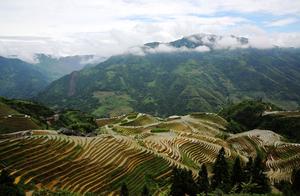
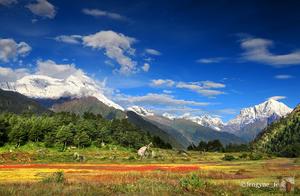
During the journey, you can see different landforms on both sides of the canyon, some places with bare Huangtu mountain bodies, indicating that this area may have some Yellow Earth Plateau features. There are many villages called 'X Zhang' along the way, such as Shuzhang Village, Ezhang Village, and many other scenic areas, such as Purple Cloud Mountain and Black Dragon Pool. These didn't attract many cyclists, but the quiet mountain villages and natural scenery were more intoxicating.