Cloud Trip to Shanxi | The Real Reason Hengshan Xingsheng Temple Has Stood for a Thousand Years!
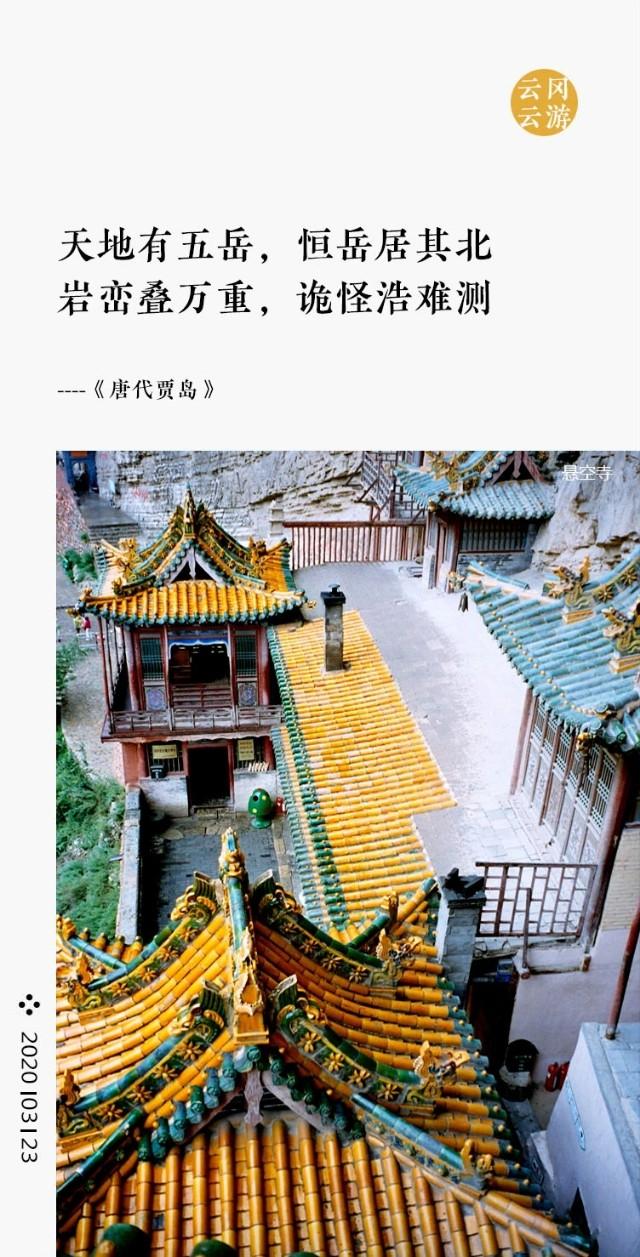
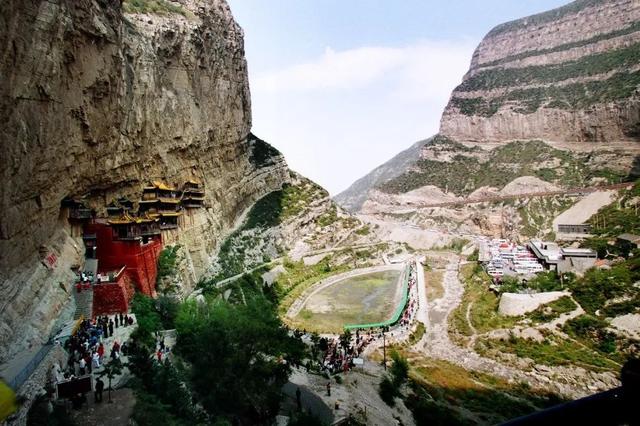
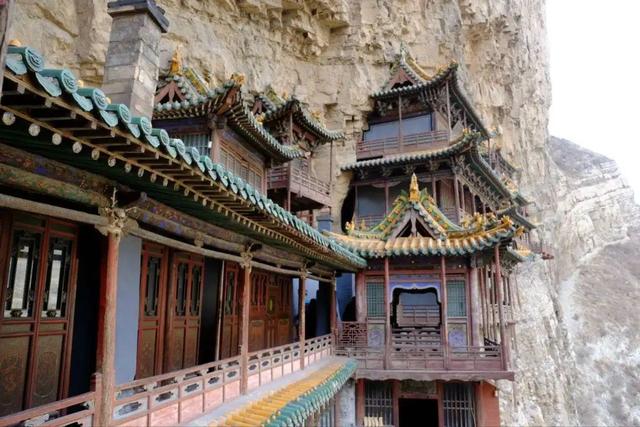
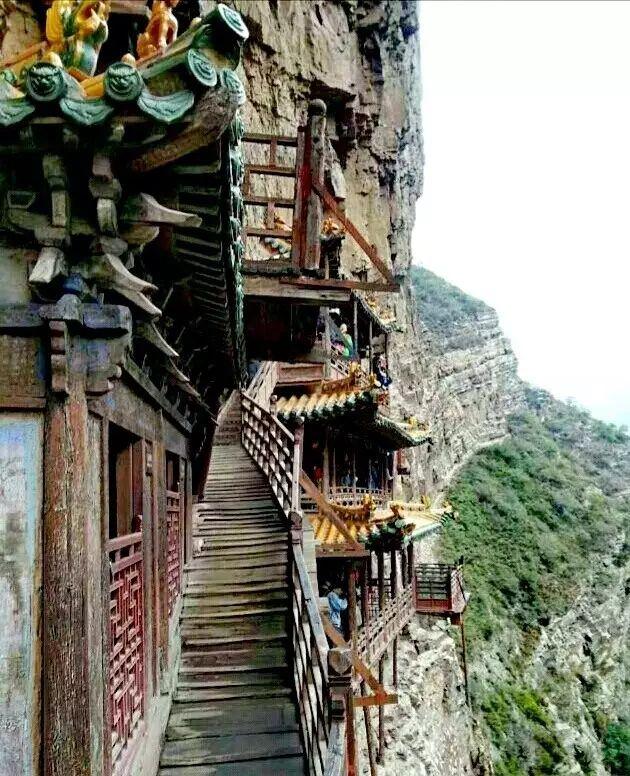
Hengshan Xingsheng Temple, located in the Jinlong Gorge of Mount Huangshan in the northern part of Hengshan, Shanxi Province, is the earliest and most complete high-altitude wooden cliff-temple architecture still existing in China.
Originally named 'Xuankongge' (Mysterious Void Pavilion), it embodies the Taoist concept of 'Xu' (Mysterious) and the Buddhist concept of 'Kong' (Void).
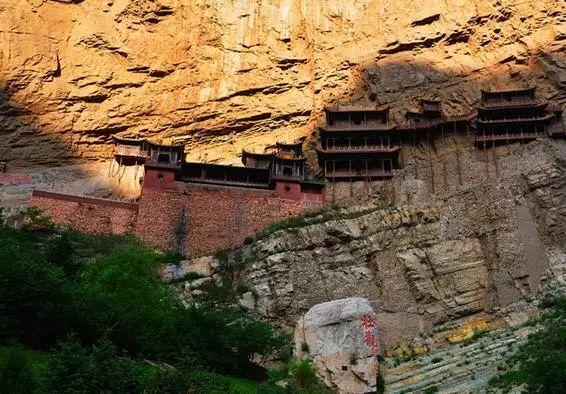
The name 'Hengshan Xingsheng Temple' derives from the meanings of 'hanging' and 'mysterious', and the temple's position seemingly suspended on the cliff inspired its name.
According to records, Hengshan Xingsheng Temple was built in the late Northern Wei Dynasty by a monk named 'Raleway'. It now has a history of over 1500 years, and has been continuously renovated throughout the ages.
Centuries of vicissitudes have seen the temple suffer from multiple earthquakes, particularly in the last 40 years, with two earthquakes of Level 6 or higher. One even caused one-third of the buildings in Huon County to collapse, but Hengshan Xingsheng Temple remained unscathed.
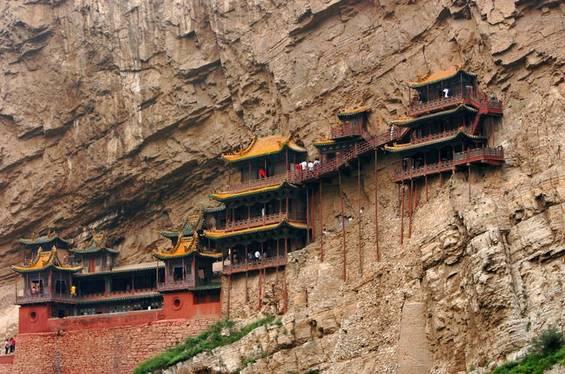
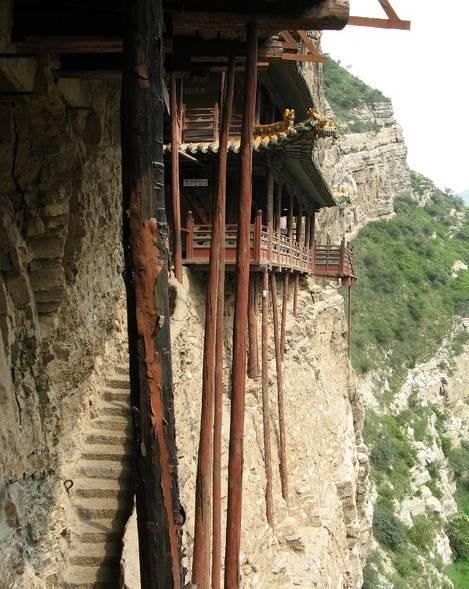
The true reason Hengshan Xingsheng Temple has stood for a thousand years is due to 1) the application of ingenious mechanical principles, despite appearing to be supported by thirteen wooden pillars roughly the diameter of a bowl, these pillars could be easily moved and had no supporting effect. The pillars were not present when the temple was built; they were installed later to reassure visitors that the temple wouldn't collapse.
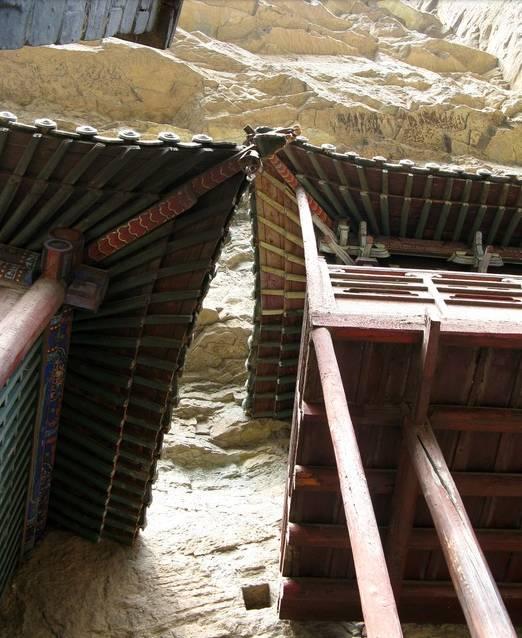
To alleviate people's fears, several wooden columns were placed beneath the temple. The real load-bearing elements were 27 rocker beams made of locally sourced iron fir wood, previously soaked in () for preservation and pest control. What's more, these rocker beams were driven into stone holes in the cliff face with wedges, the deeper the wedge was driven, the more firmly it was fixed. This principle is similar to modern expansion bolts. The upright pillars support the rocker beams, while the rocker beams press firmly against the rock. This combined support system ensured the temple's suspended state.
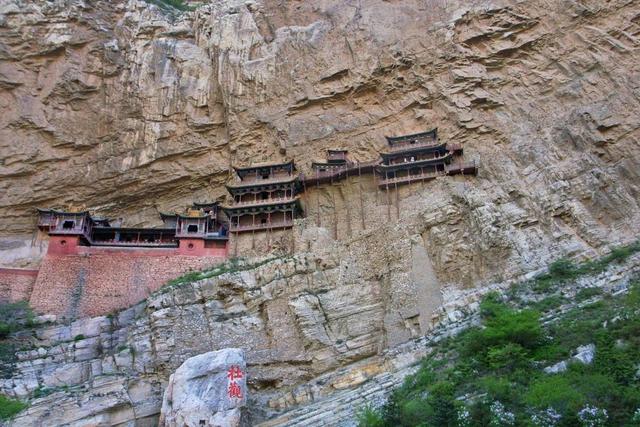
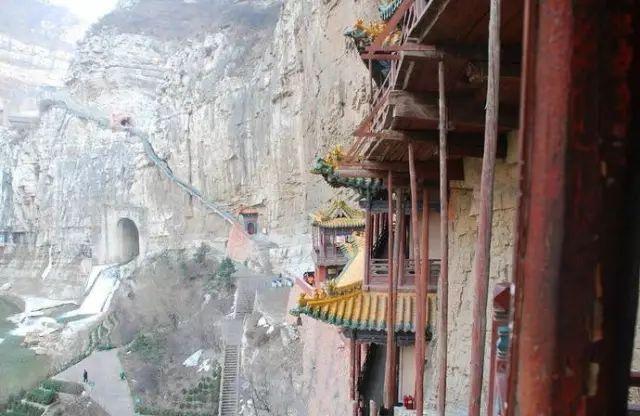
2. The Design and Location of Hengshan Xingsheng Temple, it backs against the cliff face of the Cuiping Peak and is located in a recessed area of the rock face, sheltering it from rain and falling rocks, and also avoiding the risk of flooding. The elevated position of the temple also prevented the surrounding mountains from blocking sunlight, creating a drier environment.
It's unknown whether the ancient craftsmen considered all these factors. We cannot help but admire and respect the wisdom of the ancient artisans.
The reason Hengshan Xingsheng Temple was built on a sheer cliff is that it was formerly a vital transportation route going south to Mount Wutaishan and north to Datong. The temple provided convenient access for pilgrims.
Furthermore, the Huhe River flowed from the temple's northern foot, frequently causing floods. People believed a dragon resided there, so they built a floating pagoda to ward it off.
Therefore, they constructed the temple on this hundred-meter-high cliff.
Planner: Yungang Yungou
Editor: Kui
Design: Jin
1
27
2