Angkor's Most Famous Temple, Representing the Entire Universe and Featuring the World's Most Beautiful Sunsets
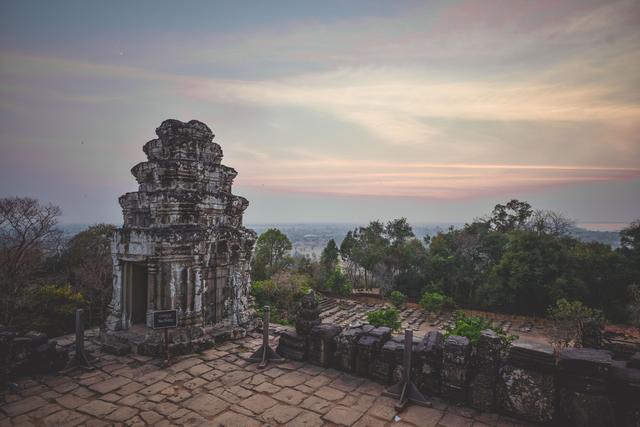
The vast Angkor temple complex in Cambodia is massive in scale, with numerous ancient buildings, making it the largest Buddhist architectural complex in the world, alongside the Great Wall, pyramids, and Borobudur, as one of the Four Great Wonders of the East. The Bakheng Mountain, in particular, holds profound significance, as the first capital city built after the relocation of the Khmer Empire, representing the beliefs of the Khmer people. It is also renowned for having some of the most beautiful sunsets.
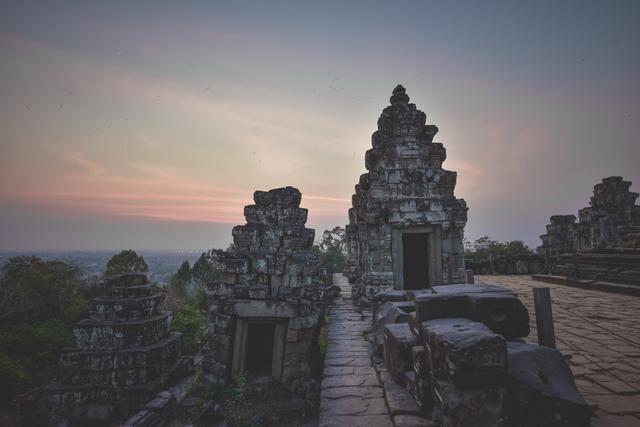
King Yuthammokhari I, after relocating the capital, remained the capital of Cambodia centered on Bakheng Mountain until the 15th century. The Bakheng Temple atop the mountain is a typical Angkor temple, laying the foundation for the later Khmer architectural style.
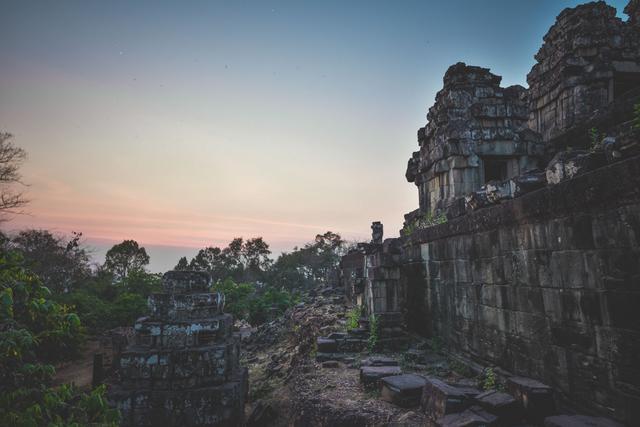
Bakheng Temple reflects the Khmer people's worship of mountains. The seven-tiered platform represents the seven heavens, with the uppermost tower symbolizing the center of the universe. The 108 small towers on the six lower levels represent the 108 days of the four months. From any axis line, one can only see 33 towers, representing the 33 deities on Mount Meru. The entire design of the temple comes from the Indian mandala style, representing the Khmer people's entire universe. Such a large-scale construction is spectacular to view from any angle.
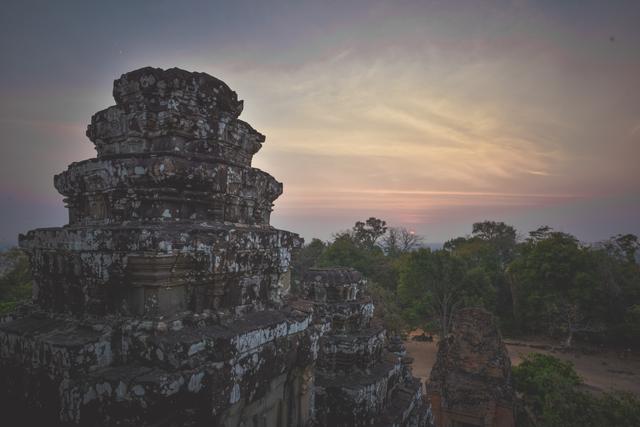
Large stone blocks were used to build the individual towers. Although the ruins are dilapidated and no longer in their former glory, the grandeur remains. Time has given it a sense of vicissitudes and bestowed it with a unique charm. Even after centuries of erosion, traces of the carvings can still be seen.
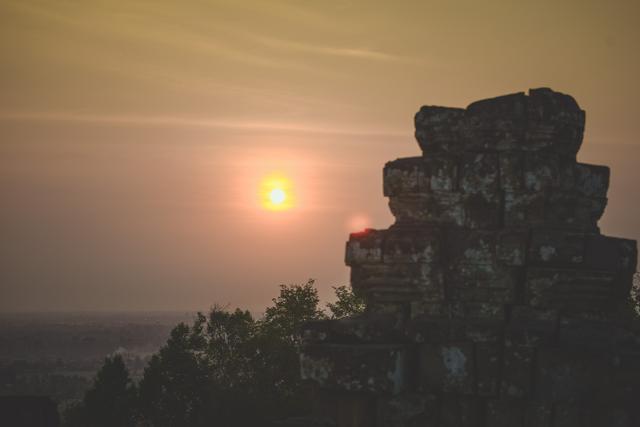
Standing at the summit, you can take in the entire panorama of Angkor Wat. It is magnificent and moving. The vantage point brings a superb view, making it a famous sunset viewing spot. The large, round sunset subdued its heat, radiating a gentle light. The tropical climate means that the forest is always lush and green, and the steam rising from it creates a hazy beauty in the evening. Unlike the fiery sunset, it is a gentle beauty, like Buddhist light, calming the heart and mind.
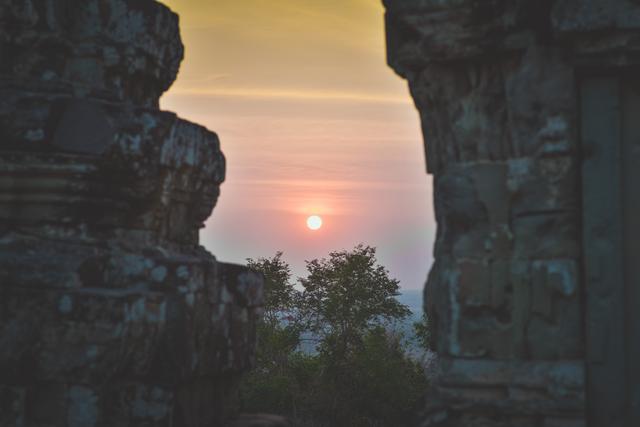
The entire Bakheng Mountain was draped in a layer of golden light. The dilapidated stone walls also presented a different beauty. At sunset, standing on the land of the fallen empire, a sense of desolate beauty came over you, inevitably making you reflect on history and feel a sense of wonder. A person's mindset always influences many things. The combination of history and scenery has become a landscape that visitors will never forget.
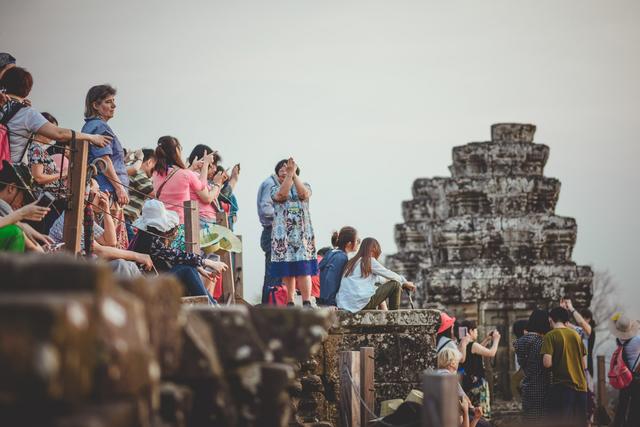
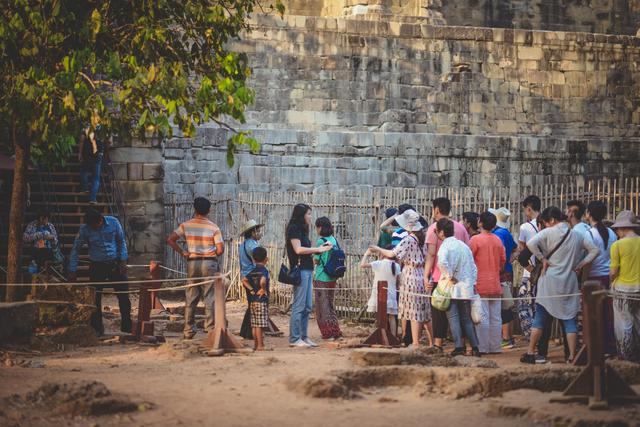
There is a dedicated sunset viewing platform on Bakheng Mountain, but it is not large and is limited to 300 visitors per day. If you want to secure a good spot, it is recommended to start queuing up around 4:30 pm, although it takes about 2 hours in the sun, it is definitely worth it.