Oriental Water City – The Ancient Cityscape of Suzhou
A charming oriental city, Suzhou attracts people from all over the world with its unique charm. Suzhou is one of the first batch of national historical and cultural cities, with a history of nearly 2500 years, and is known as 'Paradise on Earth'. As a representative of Chinese classical gardens and the Grand Canal in Suzhou, it is listed as a World Cultural Heritage by the United Nations Educational, Scientific and Cultural Organization.
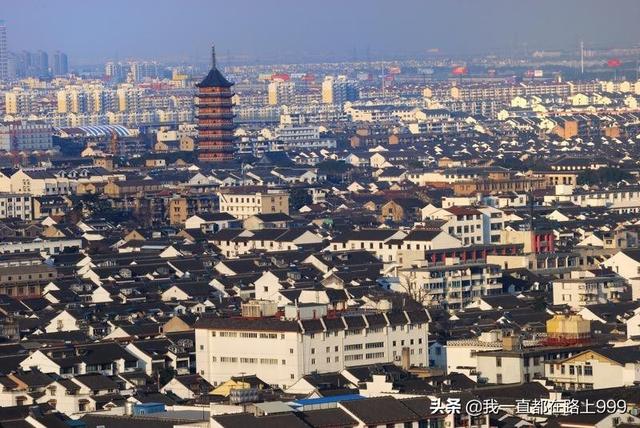
Suzhou was in the Wu and Yue lands during the Spring and Autumn Period, and was called Gouwu during the Chu and Qin dynasties, and Wu during the Sui and Tang dynasties, and Pingjiang Prefecture during the Song Dynasty, Pingjiang Road during the Yuan Dynasty, and Suzhou Prefecture during the Ming and Qing Dynasties.
Suzhou is known as 'Oriental Venice'. Venice was built in 453 AD, while Suzhou was built in 514 BC during the reign of King Goujian. The construction of Suzhou benefited from Wuguo, in the Spring and Autumn period, Wuguo followed the principle of ‘taste the soil and observe the sky’, conducting on-site surveys, observing the properties of the soil, examining the sources of rivers and streams, and then selecting the site based on it. The structure, location and orientation of the city were designed to correspond with the celestial phenomena, ‘harmonizing yin and yang, following four seasons, adapting to the changes in temperature and humidity, responding to the changes in weather’ to create ‘eight gates of land, symbolizing eight winds; eight gates of water, following the eight of earth’.
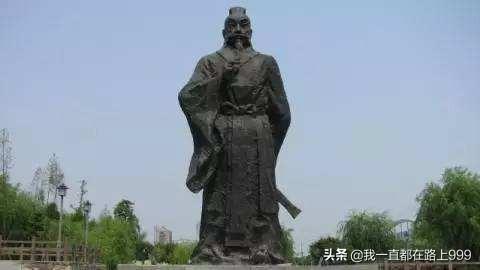
Wuguo
The entire city of Suzhou has a grid-like road pattern, extending horizontally and vertically, resembling an ancient chessboard. The road network looks like a chessboard. Suzhou has a lot of water, and there are many rivers in the old city, which have formed a criss-cross chessboard pattern. Therefore, the layout of Suzhou City is also called a water-land double chessboard pattern. Water and land are intertwined, and there are many rivers, forming small bridges, flowing water, and the oriental water city style.
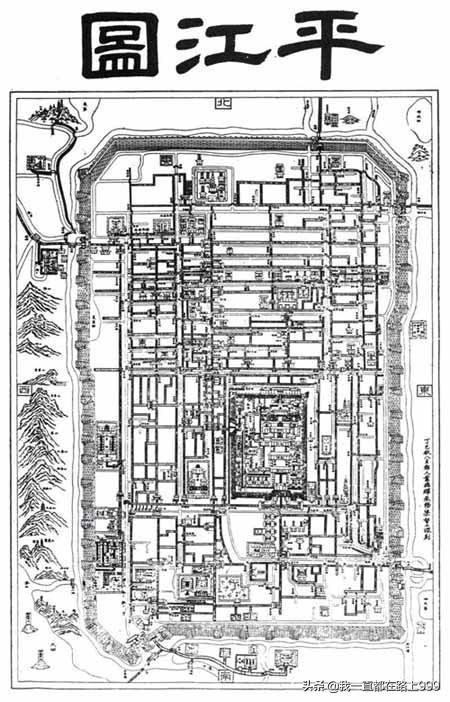
Song's Pingjiang Tu
Small bridges
In Suzhou, water and land transportation form a water-land three-dimensional transportation system. At the connection points, to ensure the smooth flow of water and land transportation, when water appears, bridges are built to connect, forming various small bridges and large-scale crossroad bridges, small alleys and rivers intersecting straight board bridges, small arched bridges. The bridges in Suzhou are not only beautiful, but also have a very artistic function.
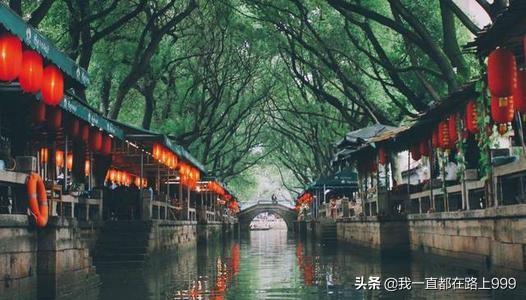
When you take a cruise through countless rivers and pass countless bridges, you will see people walking on land; when you walk on land, you will pass through countless bridges and see boats sailing in the water.
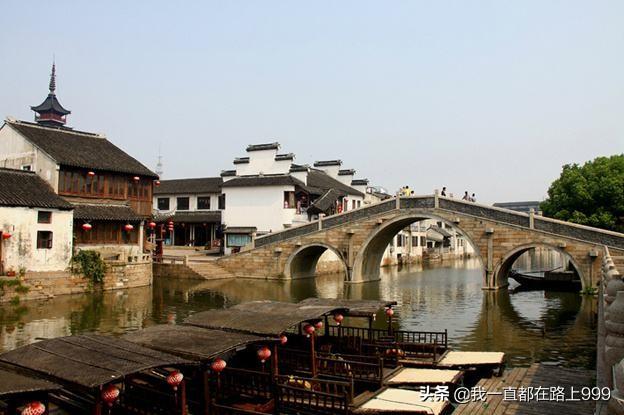
When you stand on the bridge to admire the scenery, when the people watching the scenery are watching you on the building.
Flowing water
The area of the ancient city of Suzhou is 14.2 square kilometers. The city is hilly with its east lower and west higher, and there are many rivers with a total length of about 80 kilometers. Suzhou's water mainly comes from the Yangtze River and Lake Tai. The Yangtze River flows from the northwest of the Grand Canal to the southeast, and Lake Tai water flows into () and (Panmen) through the(Shangtang River) and (Shantang River) before entering the city. It then flows slowly through the city’s river network of about 82 kilometers, and finally flows out of (Liri Men) and (Qi Men) and (Lou Men).
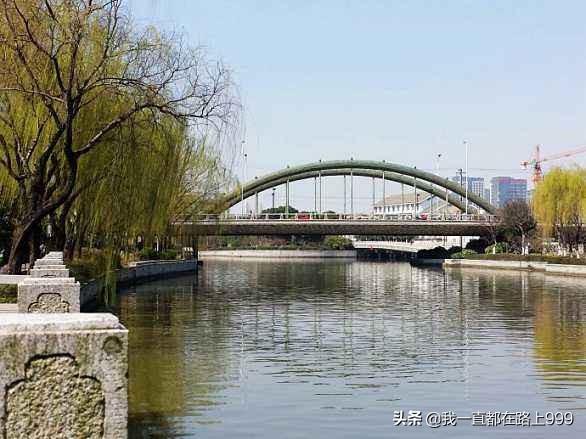
Qi Men – Water City Gate
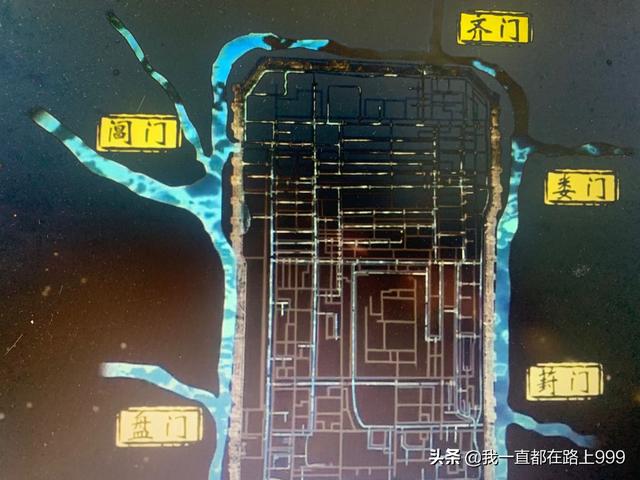
The entire Suzhou ancient city network has about two rings and fourteen branches. Along the city walls, there are two rings and fourteen branches, forming a network that connects the outer and inner rivers. The outer and inner city rivers are connected by gates, and when heavy rain comes, the fast-flowing water flows into the city through the outer city moat and enters the city. After flowing through the inner city moat and the crisscrossed river network, it slowly flows out of the city through and and .
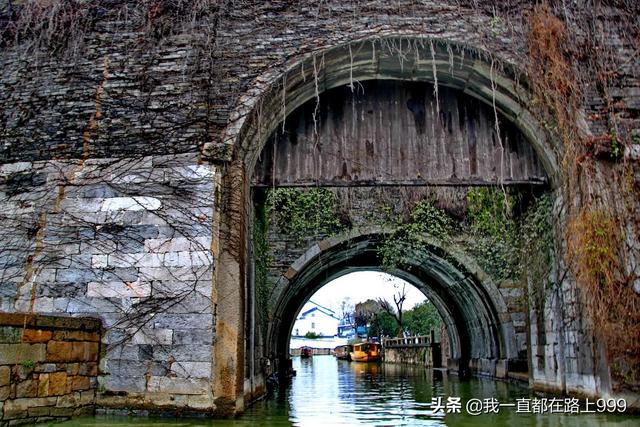
- Water City Gate
The chessboard-like layout of Suzhou, which is located by the water, has influenced the style of Chinese residential buildings. As people come to Suzhou, they settle down by the river. Most of the ancient residences in Suzhou are 'front street, back river', with white walls and black roofs, and a courtyard at the entrance. After entering the courtyard, there is a hall for receiving guests, a tea room, and then a main hall. The back door faces the river, and you can only go to the river by boat. You can go through the bridge from the back door and take a boat to the destination.
In the early days, the most convenient transportation in Suzhou was connected by water and land. For example, (), which is located at the intersection of the city's interior and exterior, is called 'one of the first two or three levels of life and fun in the world', and trade is prosperous and goods from the south and north gather here.
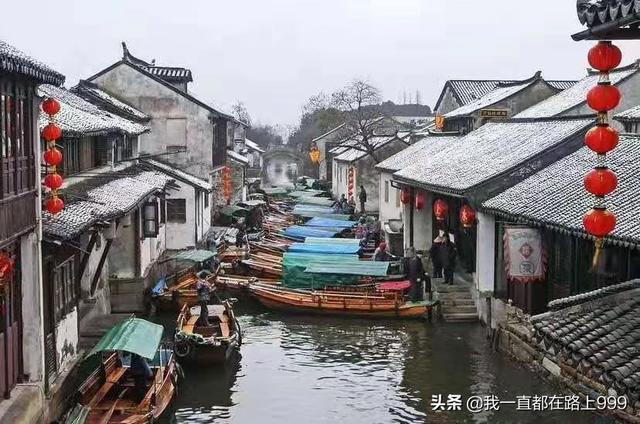
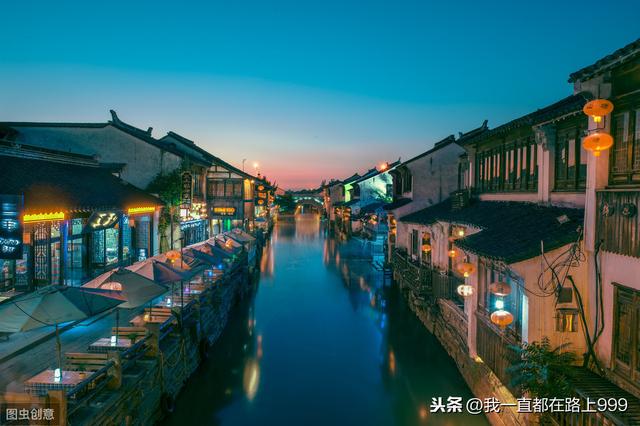
There are five rivers converging here: the Grand Canal’s south and north exits, the(Entering Tang River) and (Upper Tang River), and the (city’s city river), known as ‘five dragons converging into ()’.
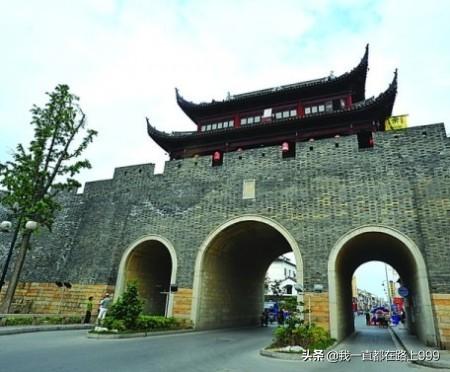
Five Dragons Converging into ()
I am a travel enthusiast who loves my articles. Welcome to forward, comment and follow.
Every day, I bring you to see different food and scenery, and different people and styles.