Canadian Government to Launch Protection Measures for North Atlantic Right Whales
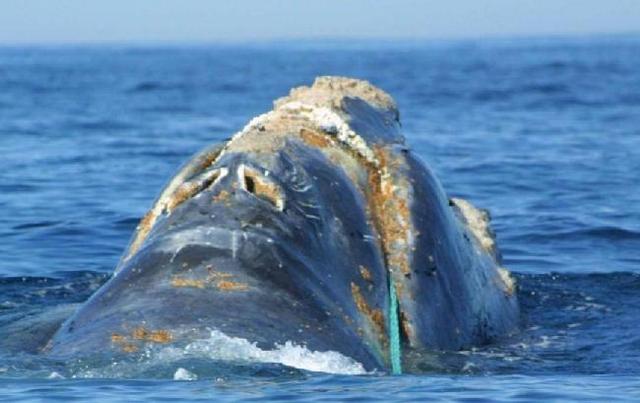
Image from the web
On February 27, 2020, the Canadian government will launch measures to protect North Atlantic right whales, which will help reduce the risk of North Atlantic right whales during the 2020 4~11 months period.
The endangered North Atlantic right whale is a iconic marine mammal, but there are about 400 right whales in the world, and the Canadian government is doing its best to protect and restore them. In the past few years, Canada has already taken comprehensive measures to help this species avoid being harmed by fishing gear and ships. To prevent entanglement with fishing gear, fisheries and the ocean, Canada will implement new gear marking regulations in the St. Lawrence Estuary whale aggregation areas, and temporarily close fishing areas will be extended to Fundy Bay, and implement new devices marking rules. In addition, the Canadian government is cooperating with the fisheries to implement fisheries device improvements starting in 2021. In 2020, the Department of Fisheries and Oceans approved the conduct of trials in closed areas using unfished gear. To prevent whales from colliding with ships, the Canadian Department of Transport will re-implement speed limits in the western St. Lawrence Bay; at the same time, if no North Atlantic right whales are found in this area, ships are allowed to navigate at safe speeds along the Anticosti Island north-south routes. Continue to use the National Aerial Monitoring Program to monitor North Atlantic right whales on the Anticosti Island north-south routes, and continue to impose fines on ships that violate the rules in 2020.
(1) The Canadian government's ship traffic measures in 2020 are as follows: ① Two seasonal management areas are established east of the restricted speed zone. During the period from April 28 to June 30, ships longer than 13 meters will be subject to a speed limit of 10 knots to provide more protection during the period when large numbers of North Atlantic right whales migrate to the Lawrence Bay; ② From July 1 to November 15, ships are allowed to pass through the two seasonal management areas at a safe operating speed unless North Atlantic right whales are found. If North Atlantic right whales are found, the speed will be restricted for 15 days; ③ A mandatory protected area is created to protect large numbers of North Atlantic right whales aggregation, cooperating with major stakeholders to implement voluntary measures, such as observing North Atlantic right whales in specific areas, including but not limited to the Cabot Strait, Fundy Bay, Placentia Bay, and the area between Newfoundland and Labrador and the Magdalen Islands, such as slowing down or prohibiting navigation; ④ The use of remote sensing aircraft systems or unmanned aircraft and hydroacoustic sleds will be incorporated into the monitoring and detection plan.
(2) The Canadian government's fisheries management measures in 2020 are as follows: ① A new one-season closure agreement is introduced in the St. Lawrence Bay. Unlike the previously established one-season closed fishing area, the new one-season closed fishing area will apply for 15 days after finding more than one whale. The affected area will continue to be closed until November 15, 2020; ② The temporary closed area is expanded to include Fundy Bay, which is a key habitat for North Atlantic right whales in the Grand Banks; in addition to relying on air and ship observation, acoustic underwater technology (hydrophones) can be used to confirm the presence of whales in the temporary closed area; ③ New device marking requirements are implemented for all non-fixed fishing gear fisheries in the Canadian Atlantic provinces and Quebec, including lobster and crab. This will allow for differentiation between Canadian and US fisheries, improve fisheries management measures.
These new measures will take effect in 2020 immediately after the crab fishing in the St. Lawrence Bay is opened. Currently, Canada has signed a contract with third-party icebreakers to open local ports for spring fishing activities in New Brunswick's northern region. In 2020, Canada's early start to fisheries will also reduce the possibility of whales interacting with fishing gear, while maximizing catch activity before the whales arrive in the area. Canada's 2020 action plan also considers the existing funding inputs from industry, provincial governments, indigenous communities, academia, non-governmental organizations and other stakeholders (including US partners).
Please indicate the source and author when translating this article:China Academy of Sciences Lanzhou Literature Information Center's 'Resource Environment Dynamic Monitoring Quick Report' Issue 06 in 2020, compiled by Wu Xiu Ping.